Share!

Showing posts with label EDOLA. Show all posts

Thursday, April 02, 2015

Episcopal Tenebrae Service

Last night, for the second year in a row, St. Paul's Episcopal had a very moving and lovely Tenebrae liturgy. The service is found in the Book of Occasional Services on p. 75. While a stunningly beautiful service, it's not done in every church. I believe that in 2014, we were the only ones in EDOLA to do one and this year, St. George's Episcopal had a Tenebrae service as well. If you haven't tried it at your church, do it if you can! 
The hearse on the epistle side of the altar             
We used the book In the Shadows of Holy Week: The Office of Tenebrae by Frederick C. Elwood and John L. Hooker, eds. for help with the liturgical format and plainsong. It's actually about 40 pages of plainchant on very similar tones! Since it's rather taxing, I decided to involve several cantors and I also invited any of our choir members to come and join in singing the canticles. I also asked both priests last year to chant and this year, our rector and director of formation chanted. The chants are simple, but they are lengthy. One thing I will say about worship with the potential for length: don't shy away from it. Worship "takes as long as it takes" in my opinion.
                         
Our service was candlelit and absolutely beautiful! I cried at the end. It was just so intense and the times when we sat together in prayer in the darkness of the night - well, it can be overwhelming! We NEED to be overwhelmed, especially during Holy Week. Again, my opinion, but having worship that doesn't stretch us or move us or challenge us to remember, imagine, feel, be moved, to feel God's love or to share God's love.....what is that truly worth?

The origins of Tenebrae are below, shared as an excerpt from In the Shadows of Holy Week: The Office of Tenebrae

The Origins of Tenebrae
The liturgy offered this night is the full, ancient form of Tenebrae. Tenebrae is a Latin word signifying “darkness,” “shadows,” and “obscurity.” It is a word that pointedly calls our attention to the scriptural accounts of our Lord’s crucifixion: The name of this service is taken from the opening words of the fifth responsory: “Tenebrae factae sunt”—“darkness came over the whole land” (Mark 15:33; also, Matthew 27:45; Luke 23:44).
It is a moving descent into the darkest days of the church year as we descend into darkness and await the ascension into light at The Great Vigil of Easter. The Medieval offices of Matins and Lauds which were combined to create Tenebrae were the usual morning offices recited by the monastic communities ministering in the Roman basilicas and collegiate churches of Europe. At Matins the morning is greeted with prayer even before the sun rises and they developed out of the nocturnal times of prayer and watchfulness (vigiliae) that were common in the early church. Matins traditionally included three distinct sections called Nocturns (meaning “divisions of the night”)The office of Lauds, which in Tenebrae follows the Third Nocturn of Matins, is the traditional morning prayer of the church in the western world. The word “laud” means “to sing or speak the praises of” and originally implied a formal act of worship.
The union of the two liturgies produced a ritual greater than the sum of its parts. Through their correlation with the systematic extinguishing of candles unique to Tenebrae, those who originated the ceremony gave a new and greater interpretive task to the psalms and canticles. As noted, in their new liturgical context these poignant scriptural laments serve as commentary upon the darkness that gradually enshrouds the church and ominously envelops Jesus’ life during Holy Week.



Sunday, June 08, 2014

Pentecost Sunday, 2014

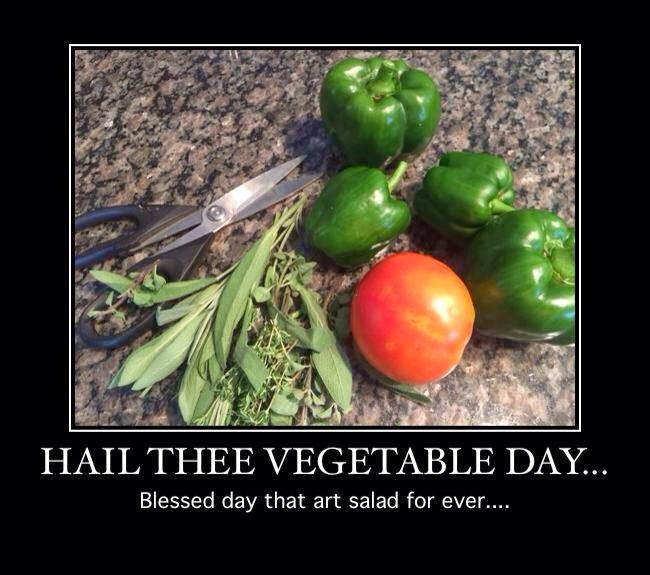
Today was a big Pentecost service at St. Paul's NOLA. Fr. Rob, who is currently on an EDOLA pilgrimage in The Holy Land, sent us is sermon via Skype and YouTube during the service! The choir was small, yet fabulous! Here is a collage from today that I managed to take and a meme that I made. I taught my choir that when I was young, our choir at St. Michael's Episcopal used to sing "Hail Thee Festival Day" as "Hail Thee Vegetable Day.....blessed day that art salad for ever..." SO FUNNY to hear my choir doing it now :-)


Saturday, June 07, 2014

Episcopal Prayers at the Close of Day

From the New Zealand Prayer Book:

Lord it is night. The night is for stillness. Let us be still in the presence of God. It is night after a long day. What has been done has been done; what has not been done has not been done. Let it be. The night is dark. Let our fears of the darkness of the world and of our own lives rest in you. The night is quiet. Let the quietness of your peace enfold us, all dear to us, and all who have no peace. The night heralds the dawn. Let us look expectantly to a new day, new joys, new possibilities. In your name we pray. Amen.
A Starry Night of Iceland
Credit: Stephane Vetter (Nuits sacrees)
http://apod.nasa.gov/apod/ap110517.html

Thursday, June 05, 2014

PENTECOST

PENTECOST
What exactly is that? Why do we wear red? Why do we read the Gospel in different languages? What's this about "the birthday of the church"? I put together some info. to help answer these questions ~ Caroline
What is Pentecost?
June 8th marks "the Fiftieth day" of Easter and is a prominent feast in the calendar of ancient Israel celebrating the giving of the Law on Sinai, and also later in the Christian liturgical year commemorating the descent of the Holy Spirit upon the twelve Apostles of Christ. In the Eastern churches, Pentecost can also refer to the fifty days between Easter and Pentecost, hence the book containing the liturgical texts for Paschaltide is called the Pentecostarion. The feast is also called Whit Sunday, Whitsun, or Whit, especially in England, where the following Monday was traditionally a holiday. Pentecost is celebrated seven weeks (50 days) after Easter Sunday, hence its name.  Pentecost falls on the tenth day after Ascension Thursday.
Source: http://aibtv.com/interfaithcalendar/p-ups/may/pentecost.htm 

What happened that day?
Ten days after Jesus ascended into heaven, the twelve apostles, Jesus’ mother and family, and many other of His disciples gathered together in Jerusalem for the Jewish harvest festival that was celebrated on the fiftieth day after Passover.  While they were indoors praying, a sound like that of a rushing wind filled the house and tongues of fire descended and rested over each of their heads.  This was the outpouring of the Holy Spirit on human flesh promised by God through the prophet Joel (Joel 2:28-29).  The disciples were suddenly empowered to proclaim the gospel of the risen Christ.  They went out into the streets of Jerusalem and began preaching to the crowds gathered for the festival.  Not only did the disciples preach with boldness and vigor, but by a miracle of the Holy Spirit they spoke in the native languages of the people present, many who had come from all corners of the Roman Empire.  This created a sensation.  The apostle Peter seized the moment and addressed the crowd, preaching to them about Jesus’ death and resurrection for the forgiveness of sins.  The result was that about three thousand converts were baptized that day. (http://www.faithinterface.com.au/christian-theology/pentecost-sunday-whit-sunday)

Among Christians, Pentecost commemorates the descent of the Holy Spirit upon the Twelve apostles and other followers of Jesus as described in the Acts of the Apostles.  For this reason, Pentecost is sometimes described as the "Birthday of the Church." 
(by Rev. Jay Sidebotham) 

The Pentecostal movement of Christianity also derives its name from the New Testament event.

We wear red because it is the color of fire and blood. Red is liturgically used for Palm Sunday and Pentecost and reminds us of the tongues of fire as the Holy Spirit descended.
                
(The picture above is an icon of the Christian Pentecost, in the Greek Orthodox tradition. This is the Icon of the Descent of the Holy Spirit on the Apostles. At the bottom is an allegorical figure, called Kosmos, which symbolizes the world.)

We read in different languages because the idea is: Many languages, one prayer! It is because of this passage from Acts 2:1-4 "When the day of Pentecost had come, the disciples were all together in one place. And suddenly from heaven there came a sound like the rush of a violent wind, and it filled the entire house where they were sitting. Divided tongues, as of fire, appeared among them, and a tongue rested on each of them. All of them were filled with the Holy Spirit and began to speak in other languages, as the Spirit gave them ability." Some congregations choose to read The Lord's Prayer in many languages and some read the Gospel. If you ever have the opportunity while traveling to say The Lord's Prayer simultaneously with others speaking several languages, it is very striking and can be quite an emotional experience!

Various symbols of Pentecost include flames, wind, doves, and the breath of God and the Holy Spirit.

Other traditions included scattering rose petals from the ceiling of the churches (Italy), blow trumpets to represent the mighty wind (France), and Morris Dancing & cheese rolling (England). (http://en.m.wikipedia.org/wiki/Morris_dancing) In at least 22 nations, Pentecost Monday is a public holiday. 

Wednesday, June 04, 2014

Episcopal Prayers at the Close of Day

From the Book of Common Prayer, 1979

O God, your unfailing providence sustains the world we live in and the life we live: Watch over those, both night and day, who work while others sleep, and grant that we may never forget that our common life depends upon each other’s toil; through Jesus Christ our Lord. Amen.
Three Galaxies and a Comet
Image Credit & Copyright: Miloslav Druckmuller (Brno University of Technology)
http://apod.nasa.gov/apod/ap131020.html

Episcopal Prayers at the Close of Day

From the Canadian Prayer Book:

To you before the close of day, Creator of all things, we pray that, in your saving constancy, our guard and keeper you would be. Save us from troubled, restless sleep; from all ill dreams your children keep. So calm our minds that fears may cease and rested bodies wake in peace. A healthy life we ask of you: the fire of love in us renew, and when the dawn new light will bring, your praise and glory we shall sing. Almighty Father, hear our cry through Jesus Christ, our Lord, most high, Whom with the Spirit we adore forever and for evermore. Amen.
Milky Way Over Spain's Bardenas Reales
Image Credit & Copyright: Maria Rosa Vila
http://apod.nasa.gov/apod/ap130902.html

Episcopal Prayers at the Close of Day

From the New Zealand Prayer Book:

Support us, Lord, all the day long, until the shadows lengthen, and the evening comes, the busy world is hushed, the fever of life is over, and our work done; then Lord, in your mercy, give us safe lodging, a holy rest and peace at the last. Amen.

A Milky Way Shadow at Loch Ard Gorge
Credit & Copyright: Alex Cherney (Terrastro)
http://apod.nasa.gov/apod/ap100823.html
Many more Episcopal Prayers at the Close of Day at my Episcopal Space blog site and some here on Carsonia as well, just type in "Episcopal prayers" to search.

Friday, April 25, 2014

Easter Tidings, 2014

I wanted to post this photo that was taken by Carolina Roehner on Easter Day at St. Paul's Episcopal. Fr. Rob has this fantastic idea last year of having the whole church turn around and wave! I LOVE IT! What a terrific sense of community it conveys! It made everyone smile and came at the end of a fabulous service so what's not to like?! I like how it's informal too.
Easter Sunday, 2014. Photo by Carolina Roehner
I decided to make a collage of Holy Week photos and it came out rather well! :-)
My Collage of Holy Week 2014 :-)
 Here's my choir and here I am conducting, woohoo!
Me conducting my St. Paul's Episcopal Choir and Brass on Easter Sunday, 2014. Photo by Carolina Roehner

Saturday, January 25, 2014

Episcopal Diocese of Louisiana Racial Reconciliation Service - Jan 18, 2014


On Saturday January 18, our Diocese (EDOLA) held an historic service at Christ Church Cathedral, New Orleans. The Presiding Bishop, The Most Rev'd Katharine Jefferts Schori preached and witnessed the gathering. The purpose of the service was to mark several years of conversation surrounding the issue of racism and explore how The Episcopal Church (TEC) can more fully live into the calling of Christ. From what I understand, this was a national initiative. I remember at Gen Con 77, the theme was reconciliation and involvement was with the Native American community. Those services were AMAZING. This special service, entitled Seeking Christ in All People: A Service of Commitment to Racial Healing, Justice and Reconciliation  was both a culmination of the Year of Reconciliation and a celebration of the life and ministry of the Rev. Martin Luther King, Jr.
All were welcomed and we had a jazz reception following the service.
Rehearsal Fri night, me w/ Jarrett Follett (Dir of Music of Christ Church Cathedral), Jazz reception (Victor Atkins behind piano), and Tyrone Chambers (Excellent tenor and friend living in NYC)
I was VERY fortunate to be a team with that makes up the EDOLA Music & Liturgy Commission. It literally makes my heart sing to be able to share ideas at the diocesan level! My dear friend Jarrett, who is music director at the cathedral, invited me to conduct the service on Saturday. YAY! SO EXCITED! Over a period of a few months, we gathered a few folks from around the choirs of the diocese for a large group of singers. Our choirs: St. Paul’s Episcopal in Lakeview and the Christ Church Cathedral, were the two main choirs and the hosts. Friday’s rehearsal was terrific and I was truly able to bring out some very nice things in the music. Everyone was super excited to be there and I was able to make some music and bring alive the spiritual connections from the texts and our purpose that weekend!
Victor Atkins took this picture, from the piano, of me conducting :-)
This kind of work is THE BEST and again, it literally makes my heart sing! Our anthems were:
1.    Amazing GraceStephen Hatfield
2.    My God is So HighMoses Hogan (Tyrone Chambers, tenor soloist)
3.    Draw Us in the Spirit’s TetherHarold Friedell
"Amazing Grace" by Stephen Hatfield. Maria Elliott, Oboe
I felt that Amazing Grace needed to be included in the service, BUT I wanted a combination of the non-traditional and the hymn we all know. So, how about something where the choir NEVER actually sings the melody in its entirety?! The Hatfield arrangement allows for an instrument to perform the melody and I chose the Oboe, loosely reminiscent of the strength and edginess of bagpipe, but way more manageable J
Here is the program booklet for the service: http://cccnola.org/BULLETINS/011814.pdf
Here is a link to the audio from the entire service: http://cccnola.org/RECORDINGS/RR.mp3
Here is the link to the EDOLA Facebook page album of pictures from the event: https://www.facebook.com/media/set/?set=a.10151842759416227.1073741832.110612321226&type=1
She did a really fantastic job with this. It wasn’t a “comfortable” service for many people, but she stressed that we were leading The Episcopal Church in speaking on this issue and in reconciliation. She named the provinces around the globe and I think that some who never realized the breadth of places in the Anglican Communion, well…their eyes were opened.
Presiding Bishop and Primate of The Episcopal Church, Katharine Jefferts Schori. Photo by Debbie Edens
One of the difficulties in the service was when the litany spoke of guilt associated with current people for past slavery. This made a LOT of people uncomfortable and one of my students said he was looking around and actually saw a lot of red faces. We personally may not have been responsible for the acts of our grandparents and / or other relatives or even – OUR OWN ORGANIZATIONS such as the Episcopal Church itself in Louisiana (and New Orleans proper), BUT it is amazing to see what a bit of give in that area makes. It makes a difference to those whose lives HAVE been affected in the past, present, and I daresay – the future. It also seems to me that one of the first steps in healing is to recognize the NEED for healing, regardless of situation. For this, I am so proud to be a part of The Episcopal Church. We are willing to come to the table, to discuss, to question, and to challenge ourselves and others. This kind of tolerance and openness is certainly not unique to TEC, but it is a most definitely a strength of it.

This strength and spiritual confidence is something from which I can learn. I sometimes forget that I can proactively apply this example to my own habits and my spiritual life. It’s a good reminder. Being open and willing to present an idea and perhaps to argue a point - with the understanding that there are varying facets of any argument - is a huge risk. I will never EVER forget when one of my friends working in TEC described death threats that he had received. They were from people whose opinions were different.
Katharine Jefferts Schori with Bishop Morris Thompson
I admire our PB. She’s a scientist, a warm and kind person, an introvert, thoughtful, BRILLIANT, a great writer, she’s a pilot (so cool and I’m slightly jealous), a runner, and a woman. Her office ends in 2015 and the new PB will be installed that Fall. I was not able to snag a picture with her this visit, but I did the last time she was in New Orleans and I’m happy to have had the opportunity to meet her during the House of Bishops in 2007 and at Bishop Thompson’s consecration three years ago. I also greatly admire our Bishop Morris Thompson and what he and the diocesan clergy and staff are doing here in Louisiana!
I’m going to sign off with a prayer that has been in my life for the past twenty years and that speaks to me deeply. After Bp. Thompson’s first annual visit to St. Paul’s, I Iearned that he also uses it and that makes me very happy!
My friends,
Life is short, and we do not have
much time to gladden the hearts of
those who travel with us, so be quick to
love and make haste to be kind.
And may the blessing of the One who
... made us, and the One who loves us, and
the One who travels with us, be with
you and those you love this day and always.
AMEN.
Adapted from Henri-Frédéric Amiel (1821–1881)


Thursday, June 06, 2013

Life is Short


This has long been one of my absolute favorite adapted quotes. Our XI Bishop of the Diocese of Louisiana, Morris Thompson, says it as part of his Benediction and I finally took the time to find it online to post here with a photo [detail from portion of the stained glass window behind our Baptismal font at St. Paul's Episcopal.]
 
My friends,
Life is short, and we do not have
much time to gladden the hearts of
those who travel with us, so be quick to
love and make haste to be kind.
And may the blessing of the One who
...
made us, and the One who loves us, and
the One who travels with us, be with
you and those you love this day and always.
AMEN.
Adapted from Henri-Frédéric Amiel (1821–1881)